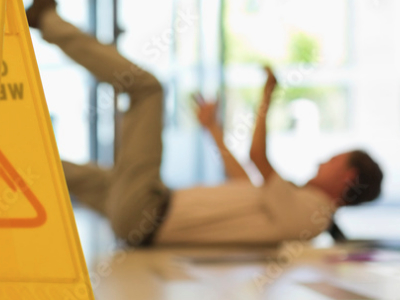
Slip and fall accidents inside stores and commercial properties are governed by South Dakota premises liability law. While a fall can happen in seconds, establishing a valid claim requires meeting specific legal standards. Understanding the key elements of a South Dakota slip and fall case can help injured victims protect their right to compensation.
Premises Liability Duties of Stores in South Dakota
Under South Dakota law, stores and commercial property owners owe a duty of reasonable care to customers who are lawfully on their premises. This duty requires businesses to take reasonable steps to keep their property safe and free from known hazards.
This duty includes, but is not limited to:
-
Regularly inspecting floors, aisles, and entryways
-
Promptly cleaning spills or hazardous conditions
-
Repairing unsafe flooring, mats, or walkways
-
Providing clear warnings when hazards cannot be immediately corrected
When a store fails to meet these obligations and a customer is injured as a result, the business may be held liable under premises liability law.
Proving Negligence in a South Dakota Store Slip and Fall Case
Premises liability alone does not guarantee recovery. An injured person must also prove negligence, which is often the most contested issue in a slip and fall claim.
To establish negligence, evidence must show that:
-
A dangerous condition existed on the property
-
The store knew or reasonably should have known about the hazard
-
The store failed to repair the condition or provide adequate warning within a reasonable time
-
The hazardous condition directly caused the injury
If a store employee created the hazard—such as spilling a liquid or leaving a floor wet—proof of prior notice may not be required.
Common Hazards That Lead to Store Slip and Fall Claims
Slip and fall accidents in South Dakota stores frequently involve hazards such as:
-
Wet or freshly mopped floors without warning signs
-
Spilled liquids, food, or merchandise in aisles
-
Snow, ice, or water tracked into entrances
-
Uneven flooring, loose mats, or broken tiles
-
Poor lighting that obscures dangerous conditions
When these hazards are left unaddressed, serious injuries can occur.
Compensation Available in South Dakota Slip and Fall Claims
If negligence is established and recovery is not barred by comparative negligence, injured victims may seek compensation for losses such as:
Medical Expenses
Including emergency treatment, hospital care, surgery, physical therapy, medication, and future medical needs.
Lost Wages
Compensation for time missed from work and loss of future earning capacity if injuries result in long-term limitations.
Pain and Suffering
Damages for physical pain, emotional distress, and diminished quality of life caused by the injury.
The amount of compensation depends on injury severity, evidence strength, and comparative negligence findings.
How Comparative Negligence Affects Slip and Fall Claims in South Dakota
South Dakota does not use a modified comparative negligence system. Instead, the state follows a slight–gross comparative negligence rule.
Under this rule:
-
An injured person may recover damages only if their negligence is considered slight when compared to the store’s negligence
-
If the injured person’s negligence is more than slight in comparison, recovery may be completely barred
-
If recovery is allowed, damages may be reduced to reflect the injured person’s limited fault
Fault is determined by comparing the relative severity of conduct, not by assigning numerical fault percentages.
Stores and insurers often attempt to argue that customers were distracted, careless, or failed to watch where they were walking in order to characterize the injured person’s conduct as more than slight.
Legal Representation and Contingency Fee Arrangements
Slip and fall claims are frequently defended aggressively by insurance companies. Legal representation can help protect injured victims from unfair fault allocation and denied claims.
Many South Dakota personal injury lawyers work on a contingency fee basis, meaning:
-
No upfront legal fees are required
-
Attorney fees are collected only if compensation is recovered
-
Fees and costs are typically deducted from the final settlement or verdict
This allows injured victims to pursue valid claims without added financial pressure.
Why Early Legal Guidance Matters
Slip and fall cases often rely on evidence that can disappear quickly, including surveillance footage, cleaning logs, and maintenance records. Speaking with a lawyer early can help preserve evidence, identify liable parties, and ensure South Dakota’s comparative negligence rules are applied correctly.
If you were injured in a slip and fall accident inside a store or commercial property, understanding — and properly applying — South Dakota law is critical to protecting your right to compensation.
South Dakota Slip and Fall Injury FAQ’s
What law governs slip and fall accidents in South Dakota stores?
Slip and fall accidents in South Dakota stores are governed by premises liability law and the state’s slight–gross comparative negligence rule. Property owners must take reasonable steps to keep their premises safe for customers lawfully on the property.
How do I prove a store was negligent?
You must show the store knew or should have known about a hazard and failed to fix or warn about it.
What damages can I recover after a slip and fall?
Compensation may include medical bills, lost wages, and pain and suffering.
Can I recover compensation if I was partially at fault for a store slip and fall?
Yes, but only if your negligence is considered slight when compared to the store’s negligence. South Dakota does not use percentage-based fault rules. If your conduct is more than slight in comparison, you may be barred from recovering damages.
Do stores have to warn customers about wet floors and spills?
Yes. Stores must either promptly fix hazardous conditions or provide clear warnings when hazards cannot be immediately corrected. Failure to place warning signs near wet floors or spills can be strong evidence of negligence.
Does a store need prior notice of a hazard to be liable?
Usually, yes. You must show the store knew or should have known about the hazard. However, if a store employee created the dangerous condition, proof of prior notice may not be required under South Dakota law.
What evidence helps prove negligence in a South Dakota slip and fall case?
Helpful evidence may include surveillance video, cleaning and maintenance logs, incident reports, witness statements, weather records, and photographs taken immediately after the fall. This evidence can show the store’s negligence outweighed any minor fault by the injured person.
Can a store deny liability by claiming the hazard was “open and obvious”?
Stores often raise the “open and obvious” defense, but it does not automatically eliminate liability. Property owners still owe a duty to maintain reasonably safe premises, and obvious hazards may still be actionable under South Dakota law.
What damages are available in a South Dakota store slip and fall claim?
If recovery is allowed, damages may include medical expenses, lost wages, reduced earning capacity, and pain and suffering. Any award may be reduced if the injured person’s negligence is found to be slight but present.
Why should I speak with a South Dakota slip and fall lawyer?
South Dakota’s slight–gross negligence standard can completely bar recovery if fault is mischaracterized. An experienced slip and fall lawyer can challenge insurance defenses, preserve evidence, and protect your right to compensation.